
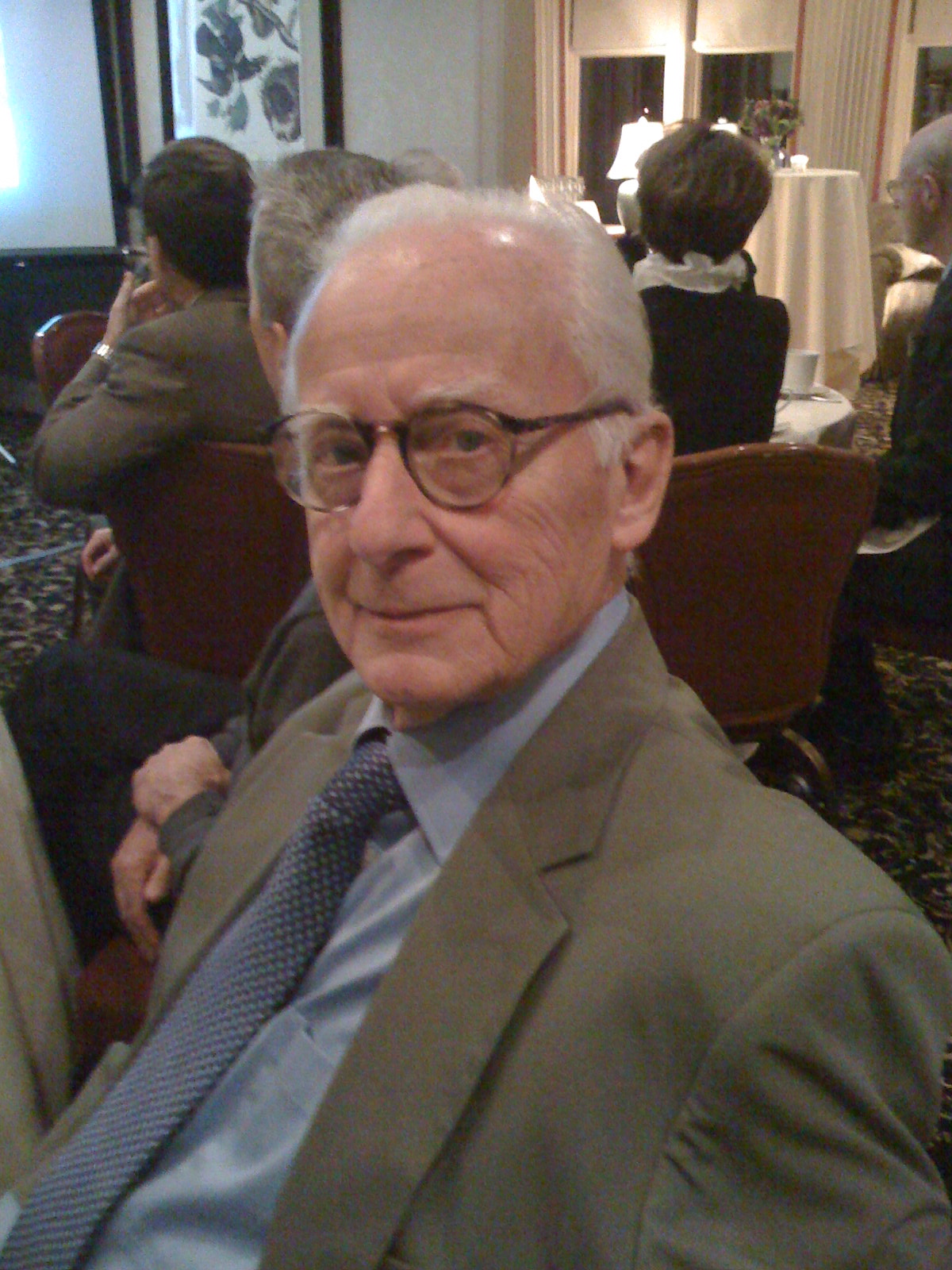
This day, January 29, marks the first anniversary of the death of my father, Ralph McInerny—husband, father, philosopher, novelist, poet. So many still miss him greatly, most of all my brother and sisters and our spouses and children, but his wisdom and wit also still permeate the lives of his siblings, students, colleagues, and friends. Here is a recent tribute published in the Notre Dame Magazine by one of his students, Christopher Kaczor, professor of philosophy at Loyola Marymount University in Los Angeles.
On January 28, 2010, the Feast of St. Thomas Aquinas, I entered my father’s hospital room in Mishawaka, Indiana early in the morning, not knowing what now looks so fitting in retrospect, that this would be the last full day before he entered into Eternal Life. A copy of his latest work of philosophy, Dante and the Blessed Virgin, lay on a table, and I held it up and said,
To which he replied, with a twinkle in his eye,
“You sound surprised.”
In Dante and the Blessed Virgin my father articulates a truth that served as one of the most formative principles of his life as both philosopher and writer of fiction. That truth concerns what he follows Aristotle in calling “poetry,” Aristotle’s name for the genus of storytelling, of fiction. About storytelling, my father says this in Dante and the Blessed Virgin:
We become involved in stories because their characters are in some way ourselves. They are our better or worse selves, but not too much the one way or the other. We follow an imagined version of the choices that make up any human life, choices that matter. We are what we do, and characters in a story reveal who they are by their actions and choices. In real life, bounders succeed and the innocent suffer; they do in fiction, too, but the story makes sense of that in a way real life never does. Any story worth reading again will tell us something about the human condition we recognize as true” (21).
These lines make clear that my father did not compartmentalize the tasks of philosophy and fiction that he so energetically and joyfully took up every day. To be sure, in his mind one of the chief aims of fiction is entertainment, and the fiction he wrote throughout his career, from the short stories he published in Redbook magazine in the 1960s, to his best-selling novel The Priest, published in 1973, to the ecclesiastical thrillers and detective stories that he published from the late 1970s to the end of his life—and beyond—all had entertainment as their aim. And yet, my father understands the goals of poetry to be multiple. Even as it strives to entertain, fiction also serves to manifest the truth about the human quest for happiness.
In other words, fiction’s imitation of human beings seeking happiness is one way of seeking the truth about ourselves. On my father’s view, fiction is the most common, the most popular path to the truth. In a paper I am not sure he ever published, entitled “God and Fiction: Ex Umbris et Imaginibus in Veritatem,” he takes the Latin motto from Blessed Cardinal Newman’s gravestone (“from shadows and images to the truth”) as a starting point for his reflection about how poetic images lead us to the truth. His aim in this essay, he writes, “is to suggest that there is a wisdom conveyed by poetry, by fiction, and because this is so, the most common philosophical path, the path to wisdom, is via the images and shadows of the poet.”
Along this most common philosophical path of the fiction writer and poet—as well as along less trodden ones—my father followed Wisdom all his life. Our sure hope is that he is with that Wisdom now.
We love him so. May he rest in peace.

